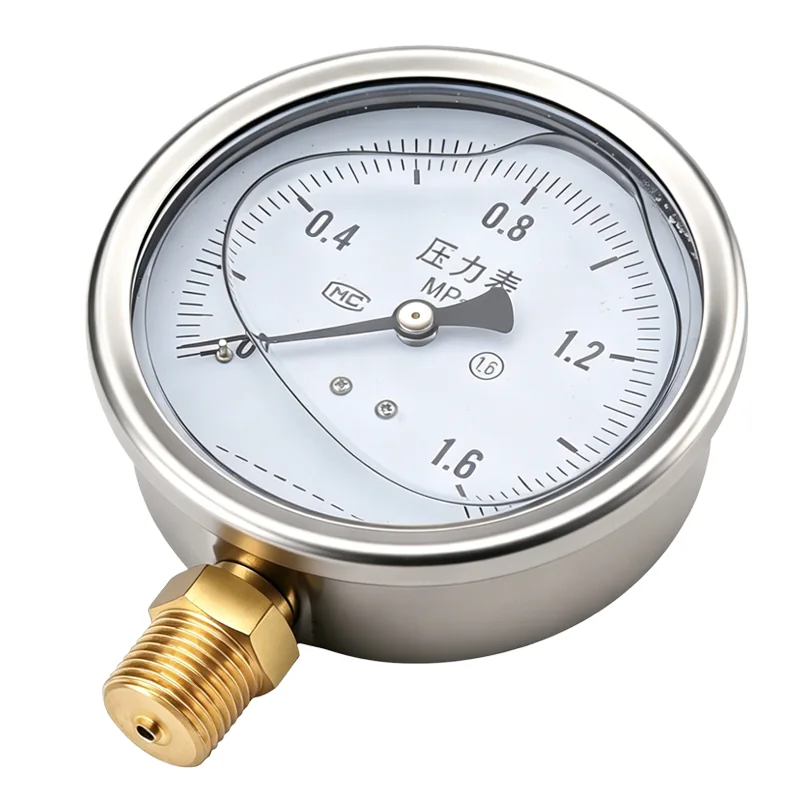
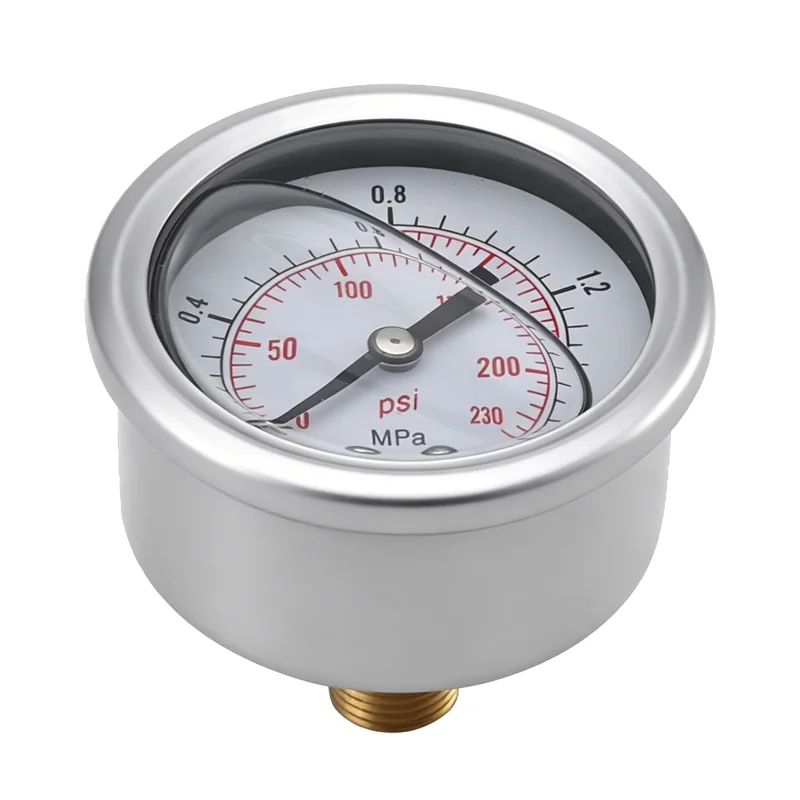
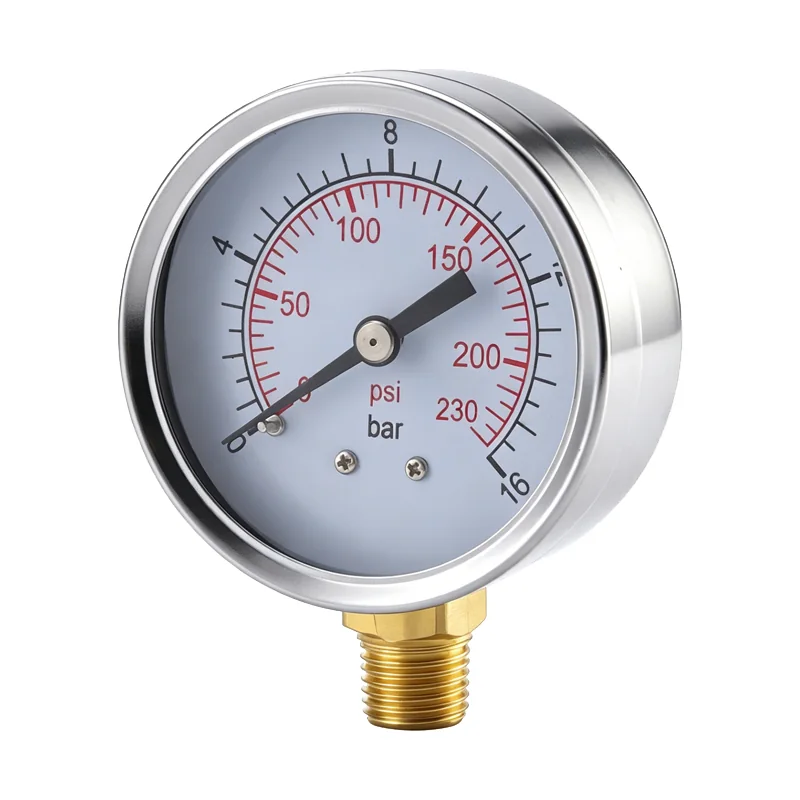
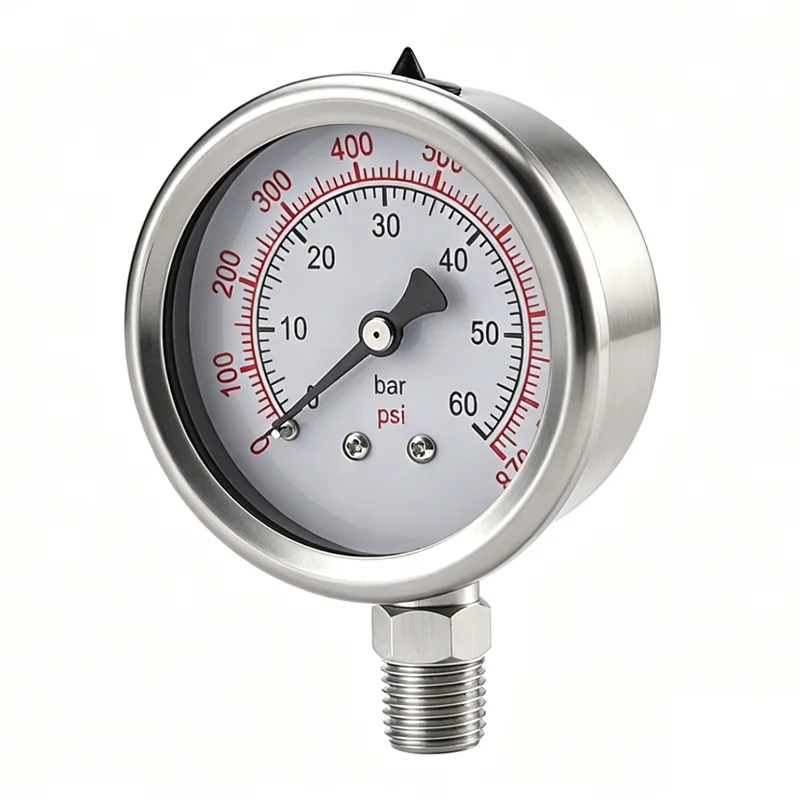
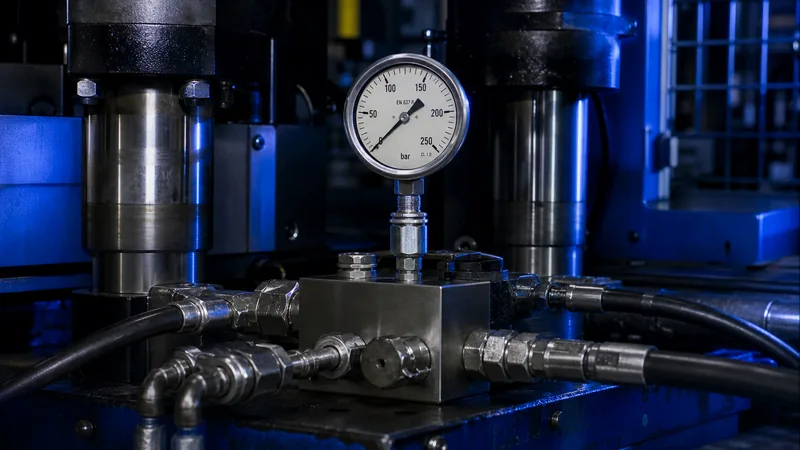
Glycerin-filled and silicone-filled pressure gauges that stabilise the pointer under vibration, pulsation and pressure spikes. 40–100 mm dials, stainless or brass wetted parts, OEM-ready.
Certified · China Ministry of Science
Proprietary gauge technology
Confirmed by applicable model
Custom dial printing supported
Glycerin or silicone fill damps needle oscillation caused by pump vibration, compressor pulsation and hydraulic pressure spikes — readings stay readable at all times.
By absorbing mechanical shock, the fill fluid reduces fatigue stress on the Bourdon tube and movement, significantly increasing MTBF in demanding environments.
Glycerin for standard −20 to +60 °C service. Silicone oil for low-temperature applications down to −40 °C. Fill type confirmed per application requirement.
Bottom-entry oil-filled gauge for vibration and pulsation service. Glycerin or silicone fill available.
Back-entry oil-filled gauge. Panel or direct-mount installation with vibration damping.
Glycerin-filled with rubber case buffer for high-impact and high-vibration applications.
Stainless steel case + 316L wetted parts + glycerin fill for chemical and corrosive service.

Discharge pressure monitoring on reciprocating or centrifugal pumps where continuous pulsation damages dry-fill gauges within months.

High-cycle hydraulic systems, presses and injection moulding machines where pressure spikes and vibration are constant operating conditions.

Chiller condenser and evaporator lines, refrigerant circuits requiring stable readings in machine-room environments with compressor vibration.

Booster pump stations and drip irrigation skids with frequent pump starts that cause hammer-type pressure spikes on the gauge.

Wellhead flow lines, gas injection systems and separator headers with fluctuating wellbore pressures and high vibration.

Ship engine rooms and offshore platform utilities where constant vessel motion demands vibration-dampened instrumentation.
No middlemen. All gauges manufactured at our own plant in Zhejiang, China. MOQ from 10 pcs for standard configurations.
Fill fluid, wetted material, thread, dial size and accuracy class confirmed before production starts. No surprises on delivery.
Custom dial printing, logo and packaging available. Suitable for distributors and OEM equipment builders globally.
Evaluation samples available for specification verification before committing to a production run.
Include these details for an accurate quote within 24 hours.
Submit RFQ Now →A sealed liquid-filled case is a closed volume. When ambient temperature rises, or when the gauge is shipped by air and then installed at a different altitude, the fill fluid and the trapped air expand and press on the Bourdon tube from the outside. The result is a small positive or negative zero offset that has nothing to do with process pressure. Most liquid-filled gauges are supplied with a vent nipple or compensating valve on top of the case: it ships closed so the fill does not spill in transit, and it is opened during commissioning to equalise the case with atmosphere. A gauge that reads a few percent above zero on installation is far more often an unopened vent than a faulty instrument. Where the gauge is installed outdoors or washed down, confirm that opening the vent does not compromise the stated IP rating for that model.
Check three things on arrival and at each inspection. Fill level should sit near the top of the case with only a small bubble; a large air gap means the case has leaked and part of the damping benefit is already gone. Fluid clarity matters because glycerin absorbs water over time and turns cloudy, and silicone can yellow after long exposure to heat or ultraviolet light — discoloration alone does not make the gauge inaccurate, but it hides the pointer and signals that the case seal has aged. Pointer behaviour is the third check: a sluggish or sticking pointer means the fill has thickened at low temperature or the movement is worn. Liquid filling extends life in vibrating service, but it does not make a gauge maintenance-free; plan periodic verification against a reference instrument in the same way as for a dry gauge.
The fill fluid damps pointer vibration so readings stay clear and the Bourdon tube movement is protected from fatigue failure in vibration or pulsation service.
Glycerin is standard for −20 to +60 °C service. Silicone oil is selected for low-temperature environments down to −40 °C or where glycerin may freeze.
Yes, in many outdoor applications. Case material, seal type, fill fluid and working temperature range must be confirmed against site conditions before ordering.
MOQ is typically 10–50 pcs for standard liquid-filled models. Custom fill fluid or non-standard configurations may require higher minimums — confirm via RFQ.
Yes. Sample gauges are available for evaluation. Indicate that you need a sample unit first when submitting your RFQ form.
Standard lead time is 2–4 weeks for stock configurations. Custom specifications or large volumes may require 4–6 weeks — confirm at RFQ stage.
The most common cause is a case vent that was never opened. Filled gauges ship with the vent closed so fluid does not escape in transit; if the case stays sealed, thermal expansion of the fill pushes the pointer off zero. Open the vent nipple at commissioning and recheck. If the offset remains, verify against a reference gauge before assuming the instrument is faulty.
Some models have a removable fill plug and can be topped up with the same fluid grade; many sealed cases cannot. More importantly, a dropping fill level means the case seal is leaking, so topping up only treats the symptom. Confirm the fill fluid type and whether the model is field-serviceable when you order, and agree a spare-parts or replacement policy for vibrating installations.
Compare filled and dry pressure gauges for vibration, pulsation, reading stability, temperature limits and maintenance before choosing a gauge for machinery or HVAC service.
Factory-direct pricing. 24-hour quote turnaround. Samples before bulk.